
Press Release
Sensors Detect – Airbag and Seat Belt Protect: ZF LIFETEC Closes Gap Between Occupant Detection and Occupant Protection
- ZF LIFETEC combines occupant detection (occupant monitoring) and adaptive restraint systems into a holistic passive safety system
- Cameras, seat sensors, and seat belt sensors capture occupant position, weight, and size, while software algorithms adapt airbag and seat belt deployment strategies to the specific situation
- “The value of in-cabin sensors lies not in collecting data, but in using that data to improve occupant safety,” says Harald Lutz, Senior Vice President Research & Development at ZF LIFETEC
- Live demonstration of production-ready technology at InCabin Europe 2026, the leading interior sensing industry event in Barcelona, September 22 to 24
Alfdorf, September 17, 2026 +++ ZF LIFETEC, one of the leading global manufacturers of passive safety systems for passenger cars, combines occupant sensing and occupant protection in an integrated safety solution. By combining occupant monitoring with adaptive restraint systems, the company has developed an integrated safety solution capable of adjusting airbags and seat belts based on the specific occupant situation. The objective is to provide a more individualized, adaptive level of protection for different occupants while supporting current and future Euro NCAP safety requirements. A demonstration vehicle at the InCabin Europe 2026 illustrates how cameras, seat and seat belt sensors and intelligent algorithms work together as part of a comprehensive safety concept.
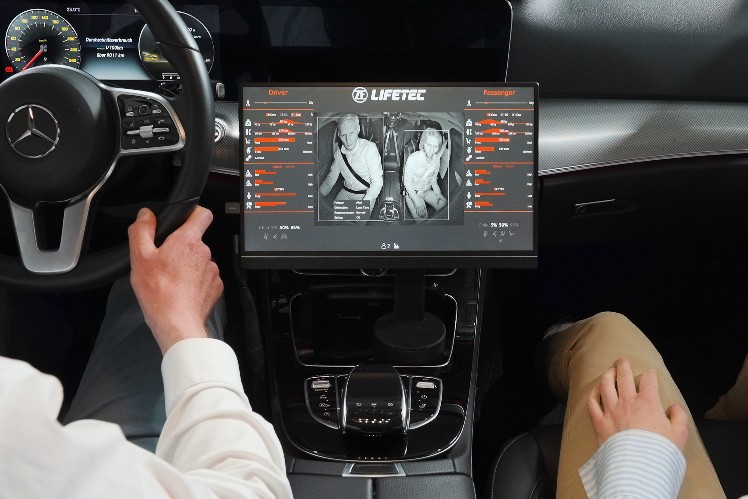
“The true value of in-cabin sensing lies not in data collection itself, but in the intelligent use of that data to improve occupant safety,” says Harald Lutz, Senior Vice President Research & Development at ZF LIFETEC. With new interior concepts, increasing vehicle automation, and more demanding safety requirements, the importance of precise occupant detection continues to grow. At the same time, Euro NCAP’s roadmap through 2030 places increasing emphasis on restraint systems capable of taking different occupant sizes, and seating postures into account when providing protection. “As vehicle interiors become increasingly individualized, the importance of systems that understand the occupant and adapt protection functions accordingly continues to grow. The combination of sensing and restraint technologies will therefore become a key building block of tomorrow’s vehicle safety,” adds Lutz. ZF LIFETEC will showcase the underlying technologies and system approach at InCabin Europe 2026, taking place in Barcelona from September 22 to 24, 2026.
How Occupant Data Becomes an Individual Protection Strategy
Cameras, seat sensors, and seat belt sensors provide information about occupant weight, position, and posture. By combining these data sources, a comprehensive understanding of the occupant situation is created, forming the basis for adaptive restraint strategies. Airbags and seat belts can therefore be tailored to different occupants and crash scenarios. The goal is to improve protection performance while managing the growing complexity of modern vehicle interiors.
“For passive safety, simply detecting a crash will no longer be sufficient in the future,” says Philipp Russ, Head of Occupant Monitoring at ZF LIFETEC. “Apart from parameters like impact direction, location and severity, it is equally important to understand who is occupying a seat, how that person is positioned, and which restraint strategy offers the highest level of protection.”
To translate this understanding into effective protection measures, ZF LIFETEC combines perception systems and passive safety technologies into a fully integrated system. In doing so, the company closes the gap between occupant detection and occupant protection. The system approach includes occupant monitoring, adaptive restraint algorithms and key passive safety components. These include adaptive airbag systems with variable venting, and adaptive cushion size, and advanced multi stage load limiting technologies. The interaction of these systems enables restraint strategies to be adapted more precisely to individual occupants and crash scenarios, helping vehicle manufacturers meet current and future safety requirements.
Euro NCAP Increases Requirements for Occupant Detection and Adaptivity
Euro NCAP roadmaps for 2026 and beyond highlight the trend toward increasingly personalized vehicle safety. Functions such as Occupant Status Monitoring (OSM), seat position and seat belt usage detection, automatic passenger airbag control, and occupant size classification are becoming increasingly important. At the same time, adaptive restraint systems are receiving greater attention in safety assessments. Future vehicle generations will need to recognize different occupant types and adjust airbag and seat belt energy management strategies accordingly. To support this, Euro NCAP is expanding its assessments to include a broader range of occupant sizes and is encouraging solutions capable of tailoring protection measures to real-world occupant situations.
With its integrated approach combining occupant monitoring, software, and passive safety technologies, ZF LIFETEC directly addresses this development. The company combines sensing systems with adaptive airbag technologies, Dual Contour Airbags for driver and passenger protection, and advanced seatbelt technologies from the ACR.8 family. This enables information such as seating position and occupant size to directly influence restraint strategies. For vehicle manufacturers, this creates a system-level approach that supports compliance with current NCAP requirements while laying the foundation for future safety challenges.
Live Demonstration at InCabin Europe 2026
At InCabin Europe 2026, visitors can experience ZF LIFETEC’s integrated safety solution live inside a demonstration vehicle. Using different seating positions and occupant sizes, the exhibit demonstrates how information from cameras, seat sensors, and seat belt sensors is combined to generate a comprehensive understanding of the occupant situation.
The demonstration illustrates the complete path from occupant detection to airbag and seat belt activation, showing how adaptive protection strategies are created based on individual occupant data. The focus is not only on the interaction of individual technologies but also on the integration of perception systems and passive safety into a complete system solution.
The showcased solution is based on technologies that are already available and production-ready, utilizing existing vehicle sensor ecosystems. It demonstrates how today’s vehicle sensor technologies can be leveraged to enable adaptive safety functions and how they can contribute to enhanced occupant protection in future vehicle generations.
About InCabin Europe 2026
InCabin Europe is one of the leading industry events dedicated to interior monitoring, occupant safety, and human-machine interaction. Each year, it brings together vehicle manufacturers, suppliers, technology companies, and experts from research and development in Barcelona. The event focuses on the latest developments in occupant monitoring, future vehicle interiors, sensing technologies, software, and safety architectures. It provides a platform for discussing technological trends, regulatory developments, and future mobility concepts.
